How Much Code AI Writes at AI Labs
Google DeepMind's pull requests with over 75% of their code written by AI rose from 44.3% to 91.3% in six months. Anthropic counts lines and changes.
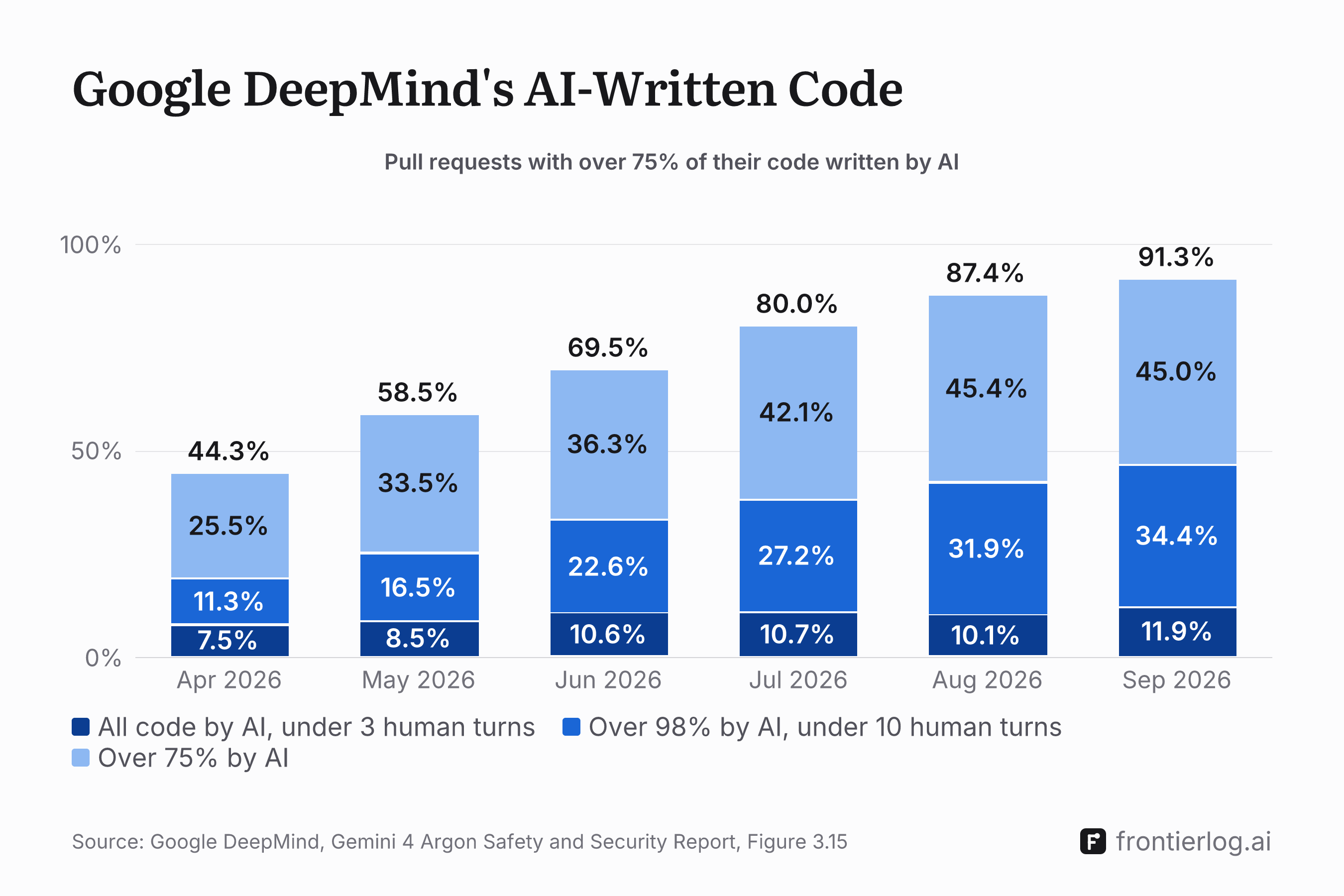
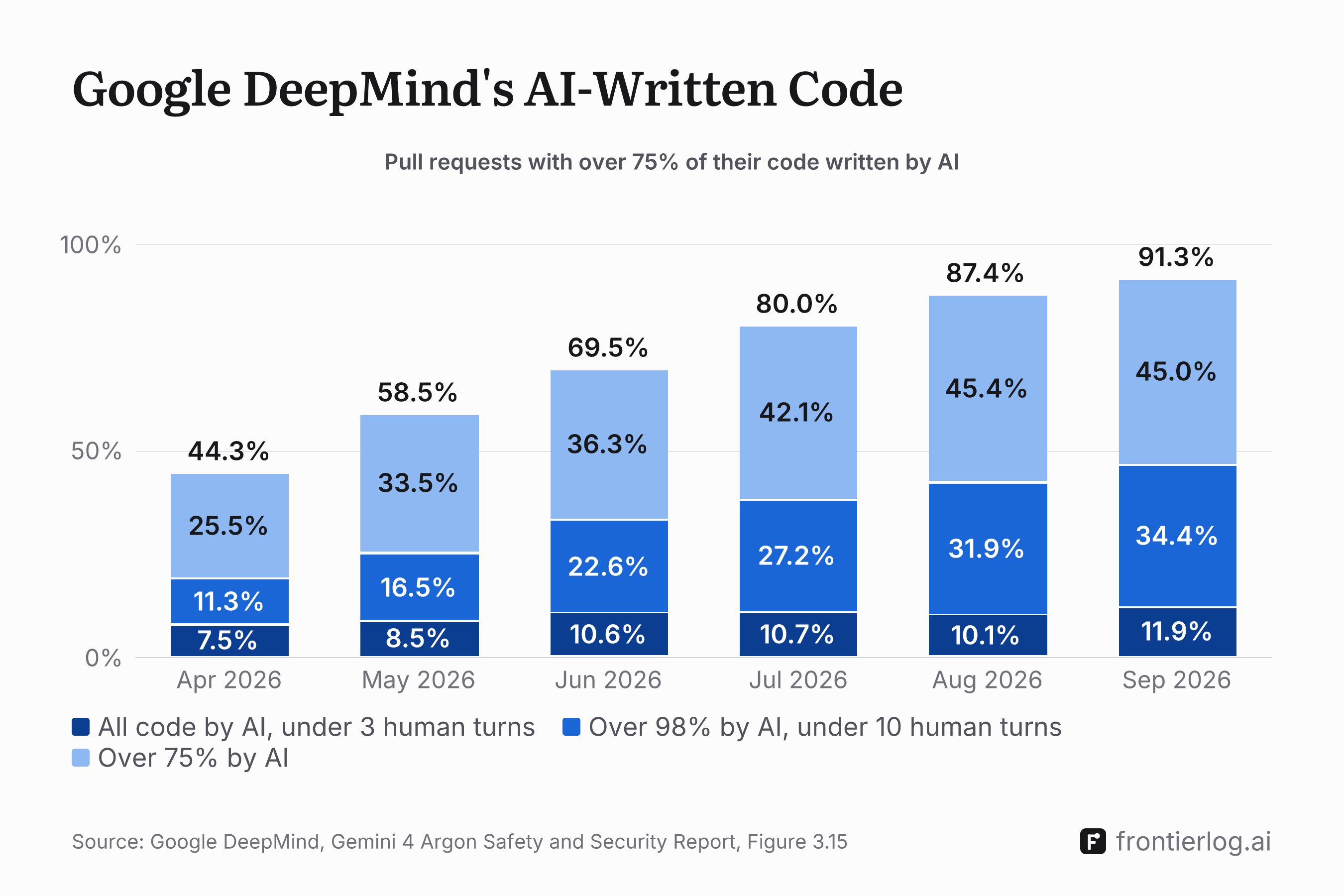
Google DeepMind's Gemini 4 Argon safety report, published in October, sorts the lab's pull requests by how much of their code AI wrote. In April 2026, AI wrote more than 75% of the code in 44.3% of them. By September, 91.3% did. Each total is our sum of the three bands that the report's Figure 3.15 prints for the month.
The chart's bottom band counts pull requests that AI wrote in full with fewer than three human turns. Its figures match the report's share of fully delegated pull requests, which "increased from 7.5% in April to 11.9% in September 2026." Google adds that "about 88% of pull requests still require iterative multi-turn human steering or human code authorship." Its analysis leaves out experimental code.
Anthropic's two figures
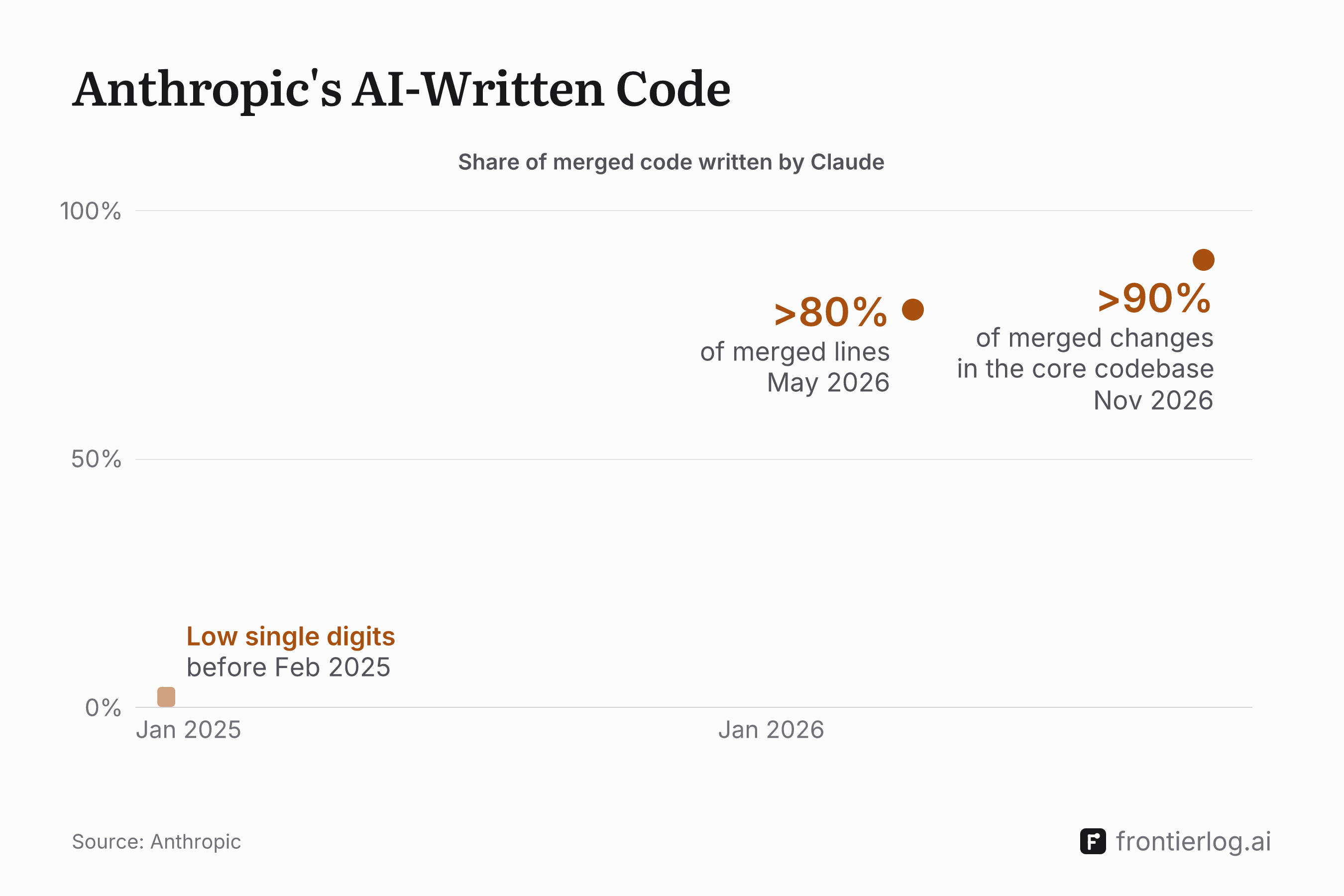
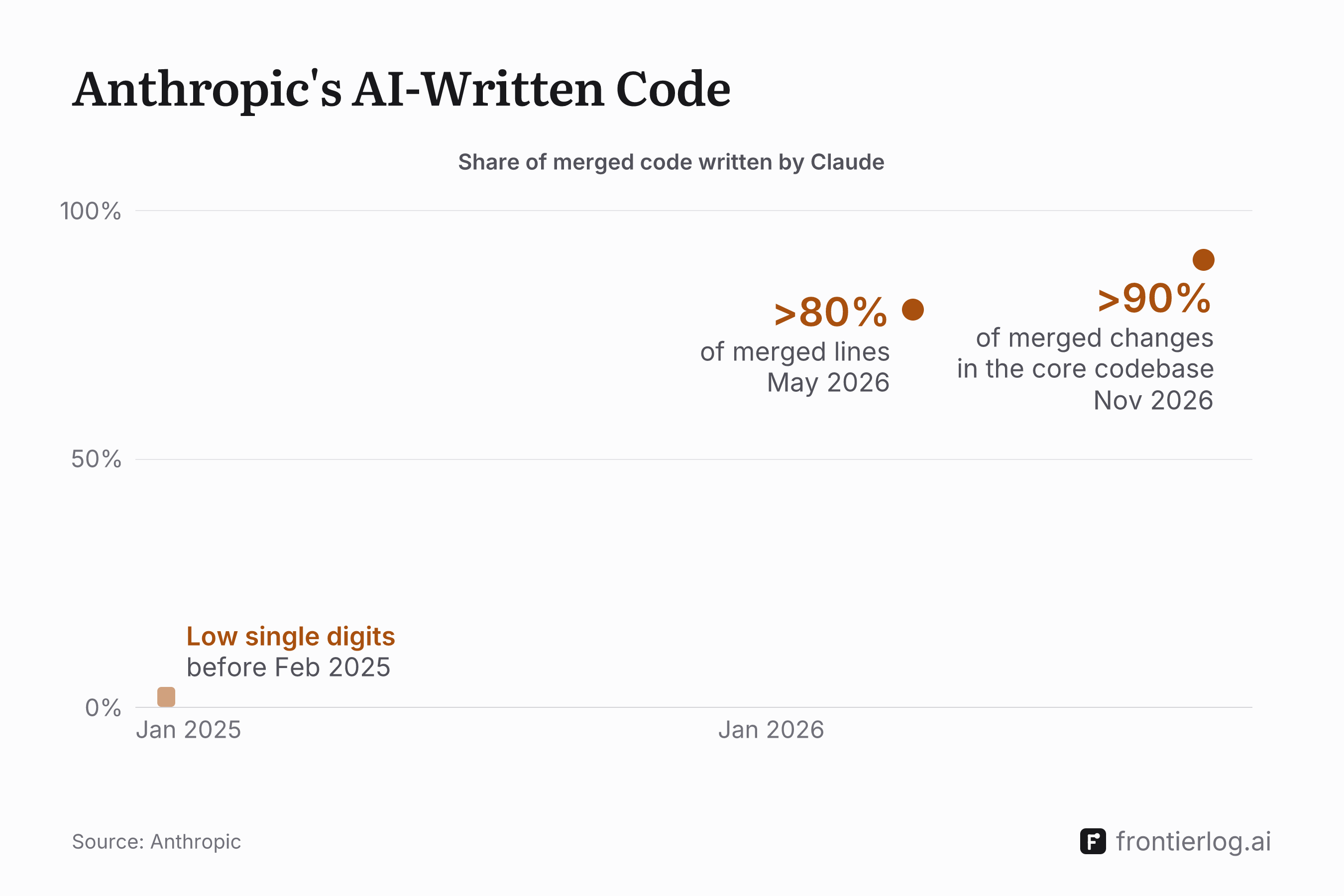
Anthropic said in When AI builds itself that "as of May 2026, more than 80% of the code we merge into Anthropic’s codebase was authored by Claude." Before Claude Code launched in February 2025, the share was in the low single digits. The figure measures the share of lines merged to production that Anthropic can attribute to Claude. Anthropic calls it conservative for two reasons: its attribution pipeline has gaps, and the lines it doesn't attribute to Claude include auto-generated code.
Its leadership have estimated 90% or more when scripts and experimental code are counted. The same report says the typical engineer was merging 8× as much code per day in the second quarter of 2026 as in 2024. Anthropic adds that this "is almost certainly an overstatement of the true productivity gain," since lines of code measure quantity over quality.
At the launch of Claude Fable 5.2 on Nov 9, Anthropic gave a second figure. "Over 90% of the changes merged into Anthropic’s core codebase are now written by Claude (with human guidance)," it said in the launch post.
OpenAI counts lines per person
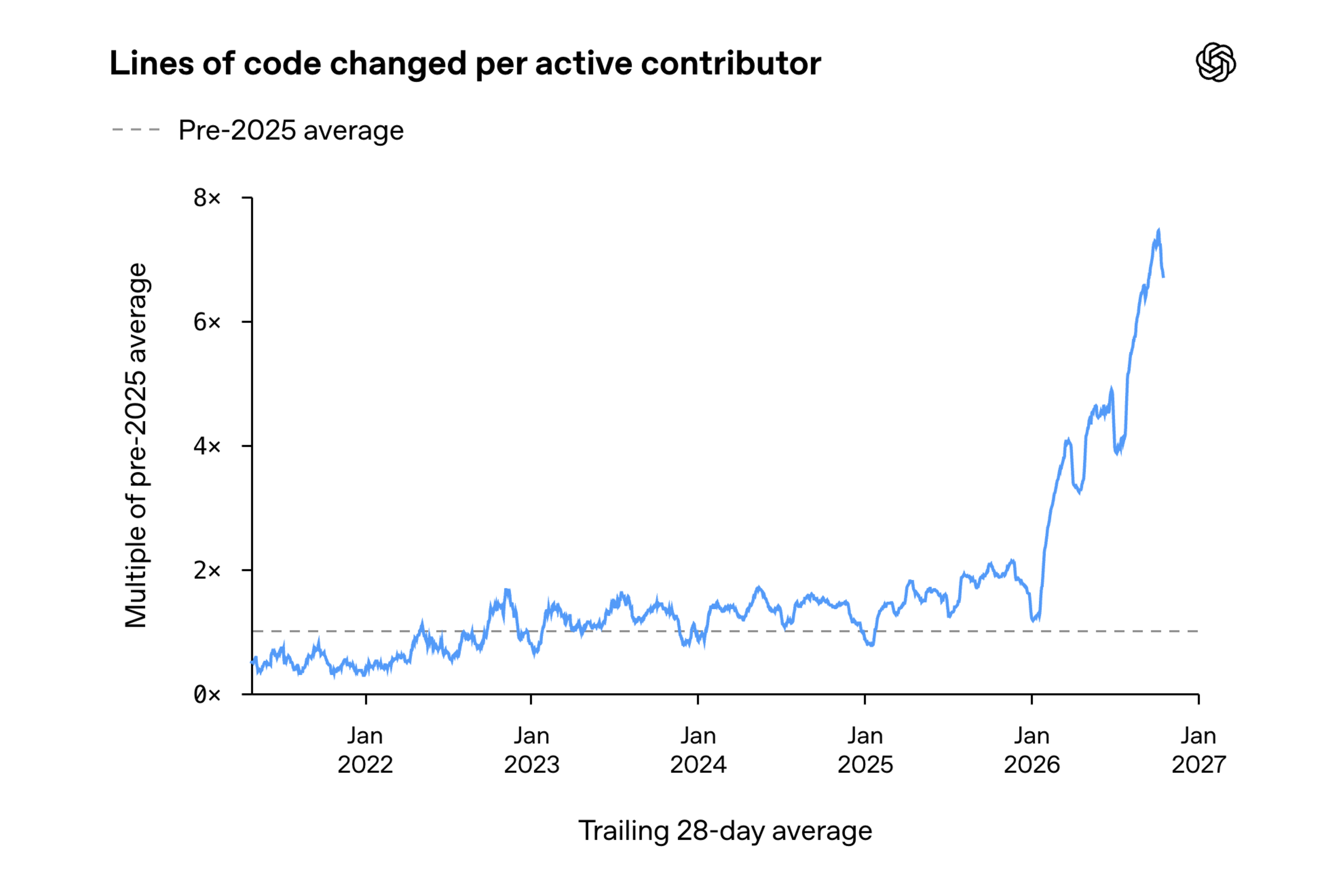
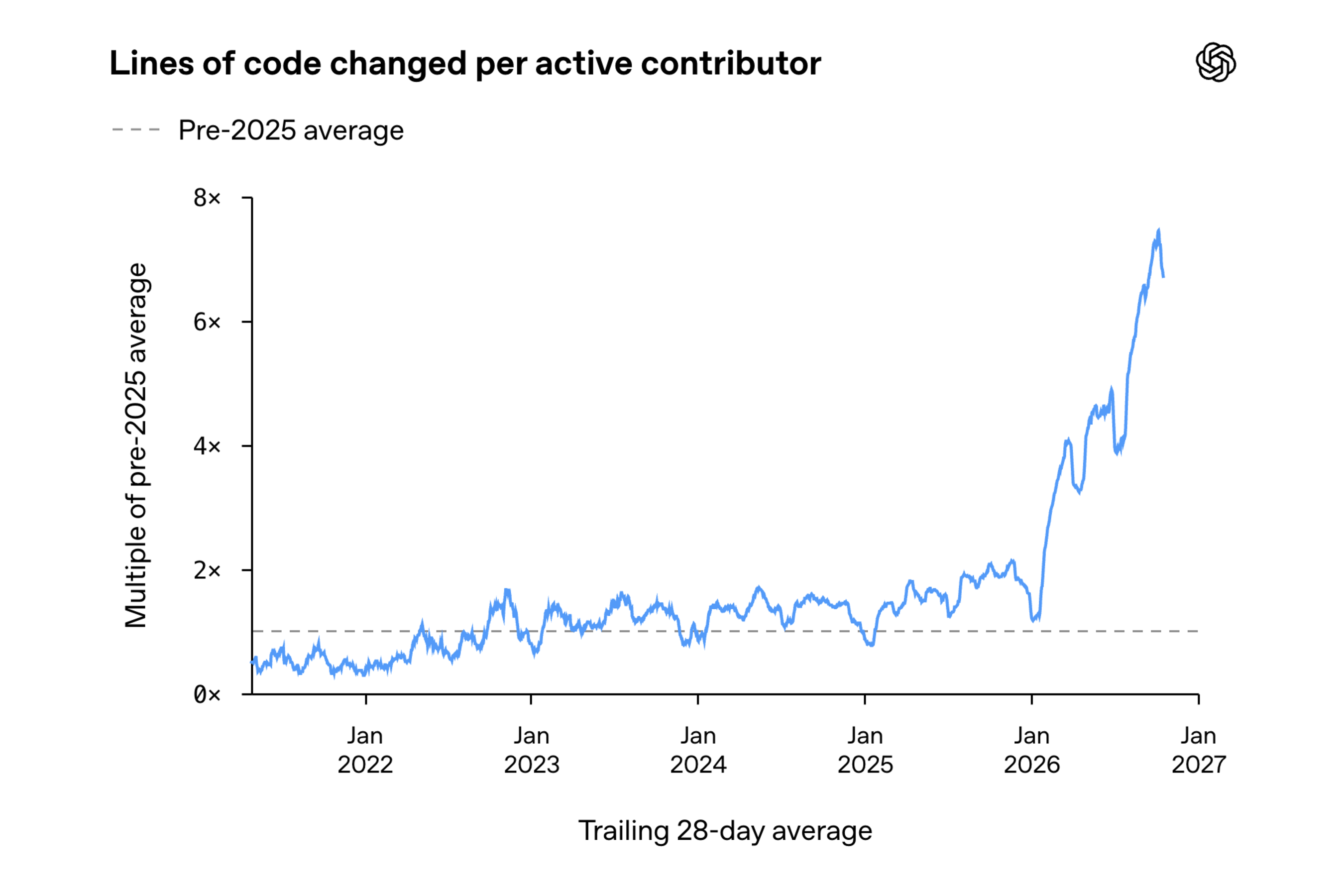
OpenAI doesn't state a share of its code written by AI. Its Nov 18 research acceleration report counts lines of code changed per active contributor instead, as a multiple of the pre-2025 average. The measure "has continued to increase sharply during 2026," the report says. It shows the figure only in a chart.
OpenAI changed the method from its September report. The chart now shows a 28-day trailing average in place of quarterly averages, and the code changes it counts now leave out tests. The report adds that increases in lines of code "do not necessarily imply faster research progress."
Different measures
The labs' figures count different things. Google's totals count pull requests. Anthropic's May figure counts merged lines, and its November figure counts the changes merged into its core codebase. OpenAI's chart counts lines changed per person, so it doesn't measure who wrote them.
Google DeepMind pull requests, 100% of code written by AI and fewer than 3 human turns
Google DeepMind pull requests, over 98% of code written by AI and fewer than 10 human turns
Google DeepMind pull requests, over 75% of code written by AI
Google DeepMind pull requests over 75% written by AI, total of the three bands
Statements
Show the quoted statements
| Party | Statement |
|---|---|
| Anthropic | Before Claude Code launched in research preview in February 2025, this number was in the low single digits.Anthropic, report |
| Anthropic | As of May 2026, more than 80% of the code we merge into Anthropic’s codebase was authored by Claude.Anthropic, report |
| Anthropic | Anthropic leadership have publicly estimated that 90% or more of our code is written by Claude, including scripts and experimental code. Our >80% figure measures the share of lines merged to production that can be attributed to Claude. This is a more conservative measurement in two ways: our attribution pipeline has gaps, and the lines not attributed to Claude include auto-generated code and other artifacts that were not hand-written by humans either.Anthropic, report |
| Anthropic | In the second quarter of 2026, the typical engineer was merging 8× as much code per day as they were in 2024.Anthropic, report |
| Anthropic | A caveat: Lines of code is an imperfect measure, as it measures quantity over quality. So 8× lines of code/engineer/day in the second quarter of 2026 is almost certainly an overstatement of the true productivity gain.Anthropic, report |
| Anthropic | Over 90% of the changes merged into Anthropic’s core codebase are now written by Claude (with human guidance).Anthropic, launch post |
| Google DeepMind | Most production code at GDM is now >75% AI-written, and the fraction of pull requests where >98% of the code is AI-written is increasing steadily. (We expect this trend to be even steeper for experimental code, which is not included in our analysis.)Google DeepMind, safety report |
| Google DeepMind | However, while the share of fully delegated pull requests increased from 7.5% in April to 11.9% in September 2026, about 88% of pull requests still require iterative multi-turn human steering or human code authorship.Google DeepMind, safety report |
| OpenAI | We first report how many lines of code are changed per active contributor over time. This measure has continued to increase sharply during 2026 relative to the pre-2025 average. Note that we have made several methodological updates since our September analysis. We now show a 28-day trailing average instead of quarterly averages, providing a more detailed view of changes over time. We have also revised the criteria for which code changes we include (in particular excluding tests), as described in Methods.OpenAI, report |
| OpenAI | These measures are straightforward to track, but increases in these measures of research activity do not necessarily imply faster research progress.OpenAI, report |
Sources
- Anthropic, reportanthropic.com/institute/recursive-self-improvement
- Anthropic, launch post, Nov 9, 2026Introducing Claude Fable 5.2 and Claude Mythos 5.2
- Google DeepMind, safety reportstorage.googleapis.com/deepmind-media/gemini/gemini_4_safety_report.pdf
- OpenAI, report, Nov 18, 2026openai.com/index/research-acceleration-jagged-frontier